EarnIn: Why Wait for Payday?
- 4.8
- Rating
- 10.00M
- Installs
- Free
- Price

 Analysis by App-foxy
When money is tight between paychecks, the problem is often timing rather than income. A bill arrives early, a fuel tank needs filling, or a small emergency appears before the next scheduled deposit. I reviewed EarnIn as a finance app built around that gap, and my overall impression is that it is most useful when treated as a short bridge, not as a permanent replacement for a budget or emergency fund.
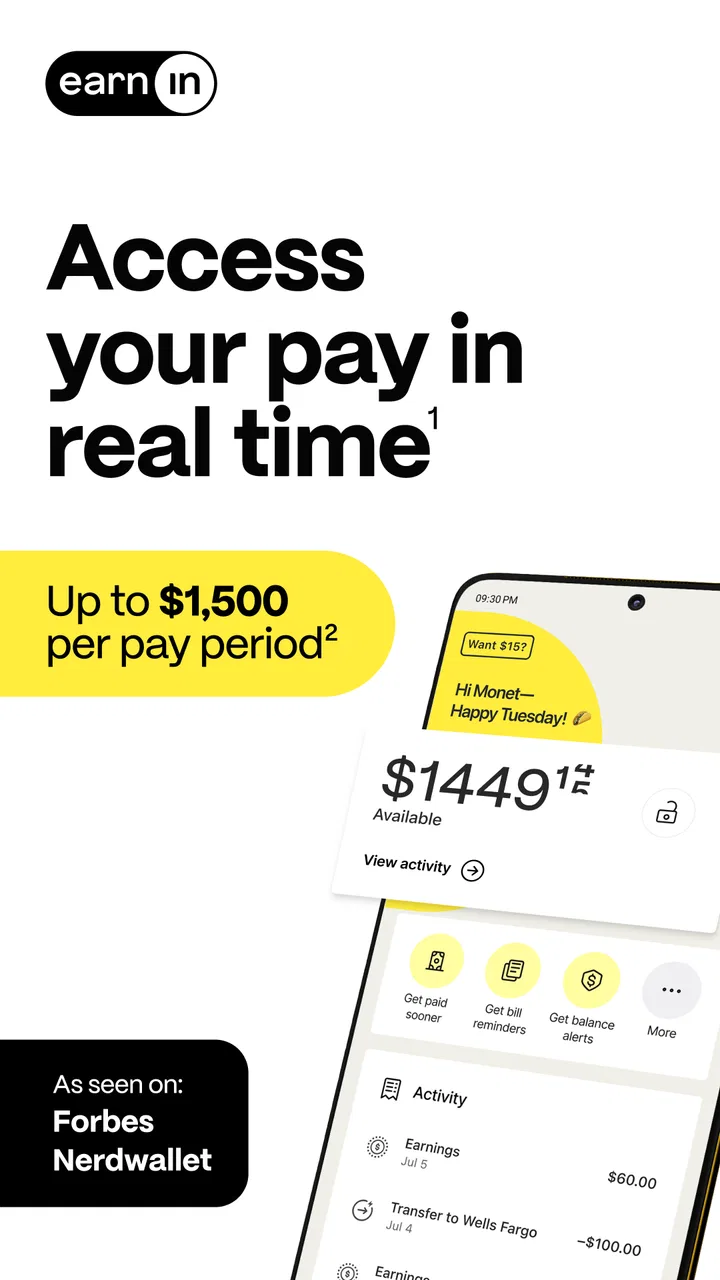
The basic idea is straightforward: the app offers an early payday cash advance of up to $150 a day, with a maximum of $1,000 per pay period. That can sound simple, but the practical experience depends heavily on when you open the app, how reliable your phone connection is, and whether you are trying to solve a genuine short-term timing problem or a recurring shortfall. Those distinctions matter more here than the headline promise.
How EarnIn fits into real mobile money situations
EarnIn comes from Activehours Inc. and sits in the finance category rather than behaving like a traditional bank account. It is free to download, carries an Everyone age rating, and has reached over 10 million installs. Its average rating is 4.7 from around 286 thousand ratings, with roughly 139 thousand written reviews, so it is clearly familiar to a large audience. Popularity is reassuring, but I would not use those numbers as a substitute for checking whether its model fits my own pay schedule and spending habits.
You May Also Like

 Blood Strike: 2.5 Anniversary
Blood Strike’s Loadouts Turn Every Drop Into a Tactical Gamble
A close look at Blood Strike’s custom loadouts: how fast access to signature weapons reshapes its battle royale rhythm, rewards preparation, and narrows the gap between fights.

 Pandora - Music & Podcasts
Pandora’s Music Is Easy to Start, but Harder to Recover
Pandora’s strength is its low-effort path from a seed to a station. Its weak spot is how much confidence it asks you to place in connection, setup, and quiet recovery.

 8 Ball Pool
 Is Built on Rivalries, Rematches, and Routine
A close look at the rivalries, rematches, shared routines, and unanswered safety questions that turn a quick pool match into a persistent mobile community.

 Samsung Music
’s Quiet Strength Is Playing What You Already Own
Its reach comes less from spectacle than from dependable access to a personal library. That simplicity is both the app’s strongest retention engine and its ceiling.

 AccuWeather: Weather Radar
AccuWeather Review: A Quick, Clear Forecast for Everyday Decisions
For everyday plans, the best forecast is the one you can understand quickly. AccuWeather makes rain timing, radar, and local conditions easy to act on, with a few trade-offs.

 Hill Climb Racing
Why Hill Climb Racing Still Turns Crashes Into One More Run
A tiny car, a bumpy hill and one more upgrade: Hill Climb Racing keeps resurfacing because its simple chaos makes every near-miss feel personal.
More From Our News Desk
View All News


In everyday use, the app makes the most sense when I already know that money is coming but need access before the normal payday. Imagine a weekday morning when a car repair is necessary for getting to work, while the next paycheck is still several days away. A conventional credit card may be unavailable or too expensive, and a bank transfer from savings may not be possible. In that moment, a mobile cash-advance tool can be more convenient than visiting a branch or applying for a larger loan.
That convenience also creates the main risk: the app can make a cash shortage feel solved even though the next paycheck has not become larger. I found it helpful to think of an advance as moving money forward on the calendar. It does not remove the expense, and it can leave the following pay period feeling tighter. Anyone considering it should first ask whether the upcoming paycheck can cover normal bills after the advance is accounted for.
Connectivity matters more than the store summary suggests
Because this is a mobile finance service, a stable connection is part of the experience. I would not wait until standing in a supermarket checkout, at a fuel pump, or outside a repair shop to discover that the app needs a better network connection. Opening it earlier, while connected to dependable Wi-Fi or a strong mobile signal, gives me time to review the available options without the pressure of a queue or an urgent payment.
This is especially important in places where reception changes quickly. Underground parking, rural roads, crowded venues, and large buildings can all turn a simple financial task into a frustrating pause. I would avoid starting an advance request while moving between networks or when the phone is nearly out of battery. A failed or delayed screen at that moment is not merely inconvenient; it can affect whether I can complete the purchase I am trying to make.
I also prefer to separate planning from spending. If I expect to need an advance, I would check the app from home, note what I can reasonably use, and then make the purchase later. That workflow reduces the temptation to request money impulsively and avoids relying on a last-second connection. It is a small habit, but it changes the app from an emergency button into a more deliberate cash-flow tool.
Useful in motion, but not a replacement for a full banking setup
The mobile format is one of EarnIn’s strongest practical advantages. I can consider a short-term cash need without finding a branch, making a phone call during business hours, or filling out a lengthy application for a larger product. For someone whose work schedule is irregular, that flexibility can be valuable. A worker who finishes a late shift may have little opportunity to deal with traditional financial services before the next day.
At the same time, a phone screen is not the best place to make a complicated financial decision. I would be cautious about reviewing the app while distracted, tired, or rushing between tasks. The small display makes it easy to focus on the amount available and overlook the effect on the next pay period. My preferred approach is to open the app when I can read the details calmly, compare the request with upcoming bills, and decide whether the need is truly temporary.
The service is also better suited to a defined gap than to general money management. If I needed help tracking several accounts, planning long-term savings, comparing loan offers, or building a detailed monthly budget, I would look to a banking or budgeting app designed for those jobs. EarnIn addresses access to earned money; it is not the same thing as a complete financial dashboard.
That distinction answers an important question for new users: should this be the first app installed when finances are difficult? In my view, no. I would first list the next paycheck, fixed bills, food, transportation, and any existing repayments. If the numbers only work because an advance will be used again and again, the underlying issue needs a broader solution. EarnIn may ease one timing problem, but repeated dependence can turn a temporary bridge into part of the monthly budget.
What happens when the connection or process goes wrong
Financial apps deserve a different standard of patience from entertainment apps. If a video pauses, I can wait. If I am trying to handle a payment or access money, uncertainty is more serious. When a screen loads slowly or a request appears incomplete, I would avoid tapping repeatedly or immediately trying a second request. First I would check whether the phone shows a reliable connection, then reopen the app carefully and review what has already been submitted.
This is one reason I would keep a simple personal record of the amount requested and the date of the expected paycheck. I do not need a complicated spreadsheet. A note on my phone can prevent confusion if I return to the app later from a different network. It also makes it easier to remember that the amount is already committed against future income, even if the money feels available in the moment.
Another useful habit is keeping the app updated. The current version is 16.32 and it requires Android 8.0 or later. On a compatible device, I would install updates through the normal app-store process before an urgent need arises rather than waiting until I am already trying to use the service. An older phone or outdated operating system can add friction at exactly the wrong time, so checking compatibility early is sensible.
I would also avoid treating a temporary loading problem as permission to switch immediately to a more expensive borrowing option. If the app is not responding, pause and verify the situation before applying elsewhere. Multiple rushed attempts can make it harder to understand what has actually happened. The safer recovery pattern is simple: confirm the network, confirm the app state, record the intended amount, and only then decide whether another method is necessary.
For users who regularly travel through weak-signal areas, the best preparation is to plan before leaving reliable coverage. I would not assume that every financial action can be completed at the exact moment I need it. This is a broader lesson about mobile finance: convenience depends not only on the app but also on the phone, battery, signal, and time available to review the transaction responsibly.
Using less mobile data without losing control
EarnIn is not the sort of app I would open repeatedly throughout the day. A data-conscious routine is easy: use Wi-Fi when practical, avoid refreshing the same screen over and over, and complete financial checks in one planned session. That approach is useful for anyone on a limited mobile plan, but it also reduces distracted browsing and impulsive requests.
I would keep notifications and phone settings under review as well, not because every alert is a problem, but because financial prompts can encourage me to think about available cash rather than actual affordability. My own rule would be to open the app because I have identified a specific need, not simply because I noticed a reminder. The difference sounds minor, yet it helps preserve the separation between earned income and optional spending.
There is also a privacy-minded reason to avoid using the app casually on public networks. When dealing with financial information, I prefer a trusted connection and a private setting. I would not enter sensitive details while connected to an unfamiliar hotspot or while someone can easily see my screen. These are ordinary phone-safety habits, but they matter more when the app concerns access to money.
For someone comparing EarnIn with a credit card, overdraft, or conventional personal loan, the right choice depends on the size and duration of the need. A small, short-lived timing gap may be better matched to an early-payday service than to borrowing a larger amount. A credit card may offer more flexibility for a purchase, while a bank loan may be more appropriate for a substantial, planned expense. The trade-off is that each alternative has its own costs, repayment structure, and eligibility rules; the convenient option is not automatically the cheapest or safest.
I would also compare it with simply asking an employer about payroll timing or building a small cash buffer. Those solutions may take more planning, but they avoid repeatedly shifting income forward. If I can delay a nonessential purchase, negotiate a bill date, or use savings without damaging my emergency reserve, those choices may be healthier than taking an advance. EarnIn is most compelling when those alternatives are unavailable and the need is genuinely immediate.
Who will benefit, and who should skip it
I can recommend EarnIn to a person with predictable income who occasionally needs access a little earlier than the normal payday. It may suit workers who understand their pay cycle, can keep track of upcoming deductions, and are comfortable making a measured request from a phone. The free price also lowers the barrier to trying the app, although “free” should not be interpreted as “without financial consequences.” The important question is what the advance does to the next pay period.
I would be more cautious for anyone with irregular income, uncertain hours, or bills that already consume nearly every paycheck. If the next deposit might be smaller than expected, moving money forward can create a new problem instead of solving the current one. I would also skip it as a routine way to fund entertainment, impulse purchases, or recurring expenses that should be included in a sustainable budget.
People who dislike mobile financial management may find the format stressful rather than helpful. If I want face-to-face guidance, a traditional bank or credit union may be a better fit. If I need structured debt counseling, a nonprofit adviser is more appropriate. If I need a long-term borrowing solution, I would compare formal loan terms carefully instead of assuming an early-payday product can handle a larger financial problem.
One non-obvious strength is that the app encourages me to think in terms of cash-flow timing rather than only account balance. Seeing what can be accessed early can clarify the difference between money already earned and money that is genuinely spare. Used thoughtfully, that perspective can make a pay-cycle problem easier to understand. Used casually, the same visibility can make future income feel spendable before it arrives.
Another important trade-off is speed versus reflection. A mobile request can be more convenient than a traditional application, but convenience removes some of the natural pause that makes people reconsider borrowing. I would create my own pause by writing down the reason for the request and the exact bill it covers. If I cannot name the expense, I probably should not request the money.
My connectivity-focused verdict
After looking at EarnIn as both a finance product and a phone-based experience, I see it as a practical tool with a narrow but legitimate purpose. Its early access model can help bridge a short gap, especially when a normal payday is close and the expense cannot wait. The app’s large user base, strong average rating, free price, and broad device compatibility make it approachable, but those conveniences do not remove the need for careful repayment planning.
The connection issue is easy to underestimate. I would use it from a stable network, well before an urgent purchase, and keep a record of what I request. I would update the app on a compatible Android device, avoid repeated refreshes, and never make a borrowing decision while distracted by a checkout line or a weak signal. Those steps are not glamorous features, but they are the habits that make a mobile finance service less stressful.
My recommendation is conditional: use EarnIn as a carefully planned bridge, not as extra income. It is a reasonable option for occasional timing problems and a poor fit for an ongoing budget deficit. If the next paycheck remains comfortable after the advance, the service may be useful. If using it means immediately needing another advance, I would choose a different path, even if that path takes more effort.
In the end, I like the convenience more than I like the temptation. EarnIn can be valuable when used with a clear purpose, reliable connectivity, and a realistic view of the next pay period. It should not replace savings, budgeting, employer conversations, or careful comparison with other financial options. For the right user and the right moment, it can make payday timing less restrictive; for everyone else, the smartest decision may be to leave the money untouched and solve the larger cash-flow problem directly.
FAQs for EarnIn: Why Wait for Payday?
01What is EarnIn and how does it work?
EarnIn is a financial app that allows users to access their earned wages before their payday. By connecting your bank account and providing employment information, the app tracks your work hours and lets you cash out a portion of your earnings instantly. It helps avoid overdraft fees or late payment penalties.
02Are there any fees associated with using EarnIn?
EarnIn does not charge mandatory fees. Instead, it operates on a voluntary tip system where users can choose to tip an amount they feel is fair for the service. This means you can access your earned wages without incurring any mandatory charges, making it a flexible option for financial management.
03Is EarnIn safe to use with my banking information?
Yes, EarnIn uses bank-level encryption to protect your personal and financial information. The app has built-in security measures to ensure your data is secure. It also requires read-only access to your bank account to verify deposits and work hours, ensuring your financial information remains safe.
04How much money can I cash out with EarnIn?
The amount you can cash out depends on several factors, including your pay cycle and hours worked. Initially, users may be able to cash out up to $100 per day, but this can increase up to $500 per pay period over time, depending on usage and payment history with EarnIn.
05What are the requirements to use EarnIn?
To use EarnIn, you must have a steady paycheck, a checking account, and a fixed work schedule. The app requires users to submit timesheets or connect their work email for automatic tracking. It is available for both Android and iOS users, ensuring broad compatibility.
Pros
- No subscription fees required.
- Easy-to-use
- intuitive interface.
- Instant notifications for transactions.
- Budgeting tools for better planning.
- Compatible with most banks.
Cons
- Limited cash out per pay period.
- Requires access to banking data.
- Not available outside the US.
- Dependent on timely employer payments.
- Potential overdraft if not managed well.

EarnIn: Why Wait for Payday?
Gallery